
How to choose a water pump
Surface, submersible or booster pump? Work out the head and flow you need, the right power supply, and the protection that stops pumps burning out.
By the WME team · Updated 1 November 2026
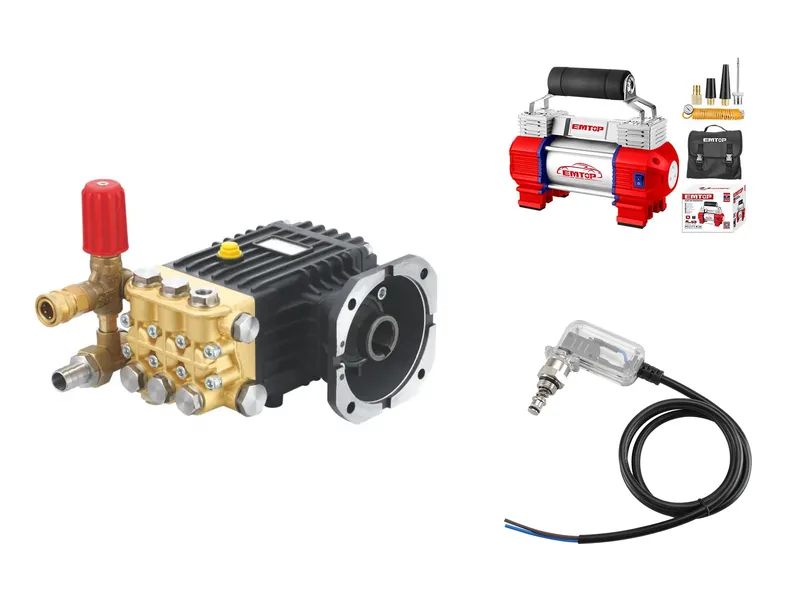
Choosing a pump comes down to three questions: where the water is, how high it has to go, and how much you need. Get those right and the model choice is straightforward.
1. Pick the type
| Type | Where it sits | Typical use |
|---|---|---|
| Surface (centrifugal) pump | Above the water, beside a tank | Moving water from a ground tank, irrigation, transfer |
| Booster pump / pressure set | After the tank, on the supply line | Steady water pressure in villas and buildings |
| Submersible borehole pump | Inside a borehole or well | Lifting water from deep wells, farms |
| Submersible drainage / sewage pump | Inside a pit or flooded area | Dewatering sites, basements, dirty water |
Surface pumps can only suck water up a limited height (about 7 to 8 metres in practice). If the water is deeper than that, you need a submersible pump.
2. Work out the head
Head is the height, in metres, the pump has to push water. Total head is:
Total head = vertical lift (from the water level to the highest outlet) + pipe friction losses + the pressure you want at the outlet.
As a rough guide, add 10 to 20 percent of the pipe length for friction on normal runs, and 10 metres of head for every 1 bar of pressure you want at the tap. Example: a 4 floor building, 15 m high, wanting 2 bar at the top floor, needs about 15 + 3 (friction) + 20 = 38 m of head.
3. Work out the flow
Flow is how much water you need, in litres per minute (L/min) or cubic metres per hour (m³/h). For a home or building, count the taps and outlets that run at the same time (around 6 to 12 L/min each). For transfer or irrigation, divide the volume you need to move by the time you have.
Then read the pump curve: pick a model whose curve passes through your head and flow, ideally near the middle of the curve rather than at the end.
4. Power supply
- Single phase 220 V: most domestic, booster and small transfer pumps (up to about 2 to 3 HP).
- Three phase 380 V: larger borehole, irrigation and building pumps.
- Off-grid: solar pump kits are an option for farms and remote sites.
5. Protection that saves pumps
- Dry-run protection: a float switch or controller that stops the pump when the tank runs empty. Running dry is the most common reason pumps fail.
- Pressure switch or pressure controller for booster pumps, so the pump only runs when a tap opens.
- Pressure tank to stop rapid on-off cycling.
- Stainless steel or bronze parts for borehole and salty water.
- Shade and ventilation for surface pumps in UAE summer heat.
Send our sales team the depth or height, the flow you need and the power supply, and we will suggest a pump from our range.