MMA, MIG or TIG: choosing a welding machine
MMA (stick) for site and outdoor work, MIG for fast workshop welding, TIG for stainless and aluminium. Plus duty cycle and power supply explained.
By the WME team · Updated 1 November 2026
The three common arc welding processes do the same basic job, but they suit very different work. Pick the process first, then the machine.
The short answer
| MMA (stick) | MIG / MAG | TIG | |
|---|---|---|---|
| Best for | Site work, repairs, structural steel | Fast production welding in a workshop | Precise, clean welds, thin metal |
| Metals | Steel, stainless (with the right rods) | Steel, stainless, aluminium (with spool gun) | Steel, stainless, aluminium (AC TIG) |
| Outdoors / wind | Good | Poor with gas; good with gasless flux-cored wire | Poor |
| Dirty or rusty metal | Tolerant | Needs clean metal | Needs very clean metal |
| Speed | Moderate | Fast | Slow |
| Skill needed | Moderate | Easiest to learn | Highest |
| Shielding gas | None | Argon/CO₂ mix (or none with flux-cored) | Pure argon |
MMA (stick) welding
MMA uses a flux-coated electrode (rod) that melts into the joint. The flux protects the weld, so no gas bottle is needed. That makes it the simplest set-up for site work, steel structures, fencing, gates and repairs, and it copes with wind and imperfect surfaces. Slag has to be chipped off after each run.
Electrode size decides current: 2.5 mm rods typically run around 70 to 100 A, 3.2 mm around 90 to 130 A and 4.0 mm around 120 to 170 A. A 200 A inverter machine covers most general work.
MIG / MAG welding
MIG feeds a wire electrode through the torch while a shielding gas protects the weld. It is fast, produces little spatter and is the easiest process to learn, which is why fabrication workshops and garages use it for sheet steel, frames and production work. Gas does not work well in wind; for outdoor jobs use gasless flux-cored wire, which many MIG machines can run.
TIG welding
TIG uses a non-consumable tungsten electrode, with filler rod added by hand and argon gas shielding. It gives the cleanest, most precise welds and is the usual choice for stainless steel, pipe work, thin sections and visible joints. Aluminium needs an AC/DC TIG machine. It is slower and needs more skill than MIG or MMA.
Duty cycle: the number most people miss
Duty cycle is how long a machine can weld at a given current within a 10 minute period before it needs to cool. "60% at 200 A" means 6 minutes of welding and 4 minutes of rest at 200 A. In UAE summer workshops the real figure is lower, so for long runs choose a machine with a higher duty cycle at the current you actually use.
Power supply
- Single phase 220 V machines suit most workshops and site generators up to about 200 A output.
- Three phase 380 V machines are needed for heavier industrial work and higher currents.
- Running from a generator? Inverter machines are lighter on the generator; check the welder's input kVA and size the generator above it (see our generator sizing guide).
Don't forget the consumables and safety
- Electrodes, wire, tungsten and filler rods to match the metal
- Gas regulator and the right gas bottle (MIG and TIG)
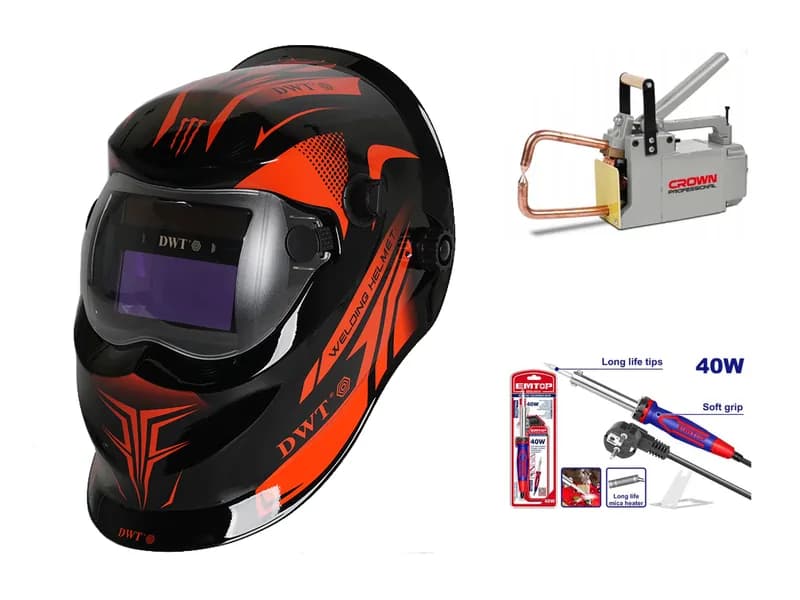
- Auto-darkening helmet, leather gloves, flame-resistant clothing
- Earth clamp and cables long enough for the job
Tell our sales team what you weld, how thick, and where, and we will suggest a machine and consumables from our range.